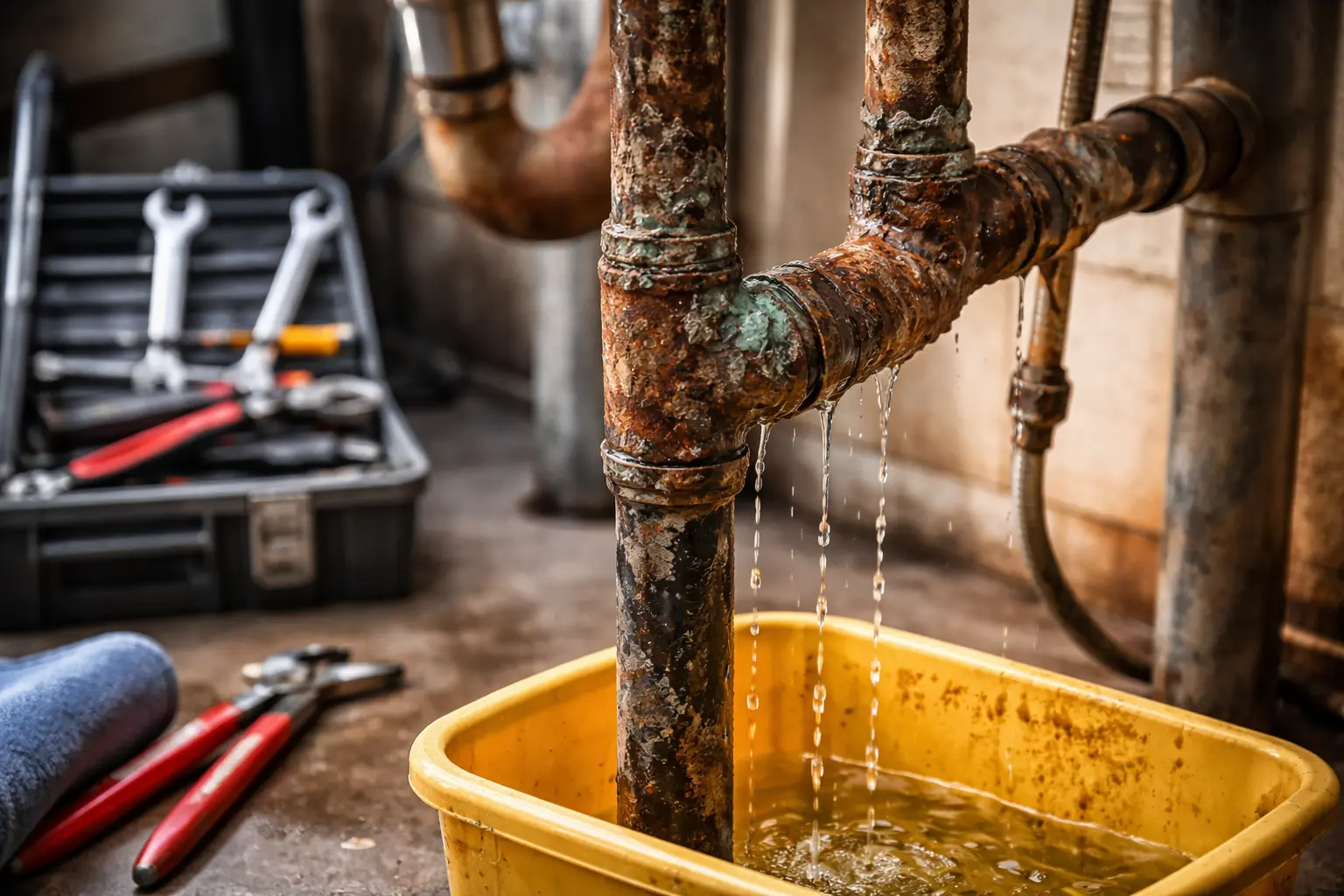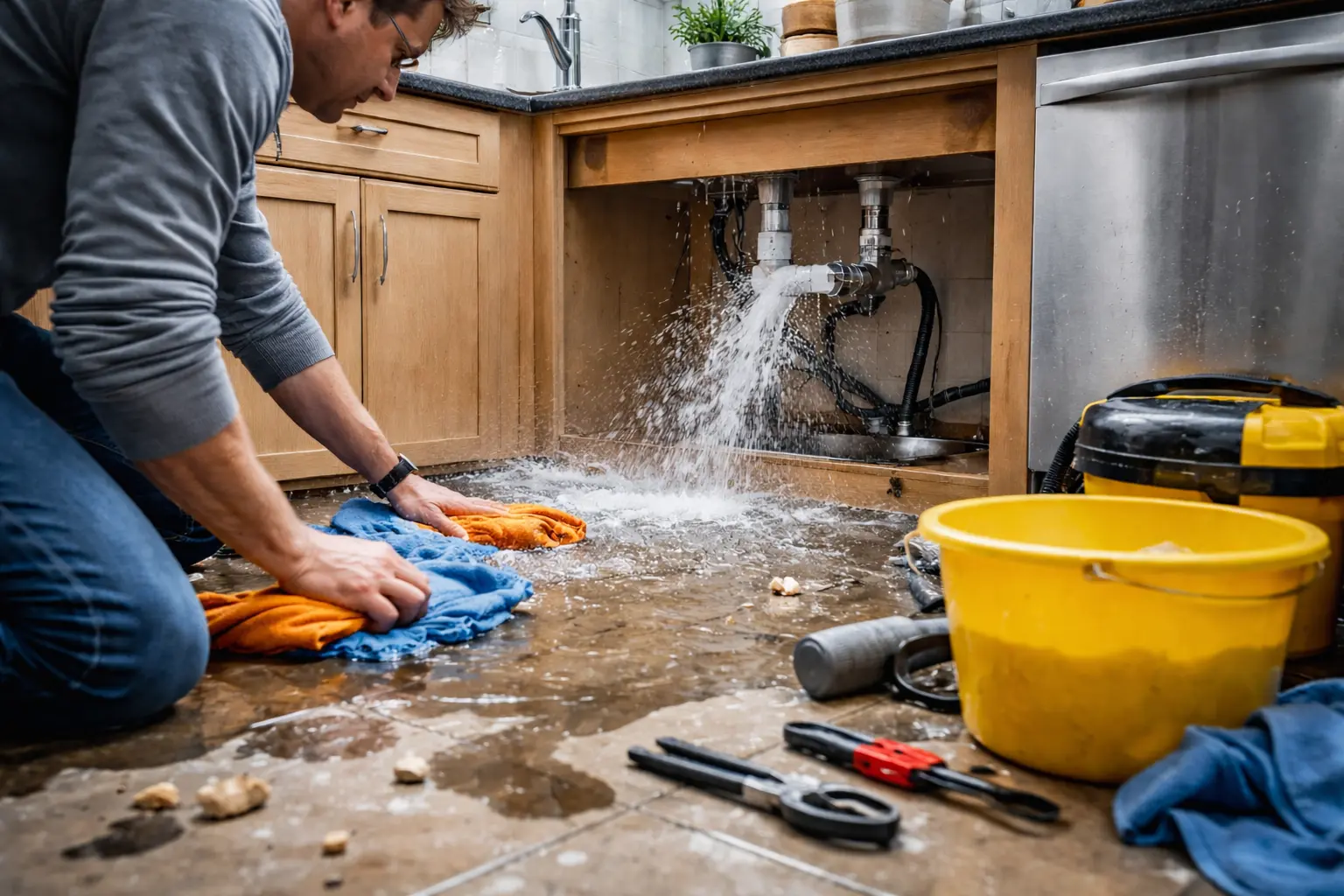
Did you ever experience a slow drain, bad scent or sudden sewage overflow and wonder what is going on under your house? The issues with sewer lines are some of those that tend to develop silently underground and thus may be overlooked until they become expensive inconveniences. The conventional methods of repairing broken sewer lines typically involve a lot of excavations, ripped lawns, and time-consuming repair schedules. Luckily, even contemporary plumbing has provided a smarter, less invasive way of solution, the sewer line spot repair.
The reason is that this is a focused repair process that acts upon particular problem areas and does not need to replace the whole pipe, thereby saving time, money, and unwarranted destruction. We will discuss the operation of sewer line spot repair and why it has become the option of choice in most plumbing problems.
1. Establishing the Problem Area
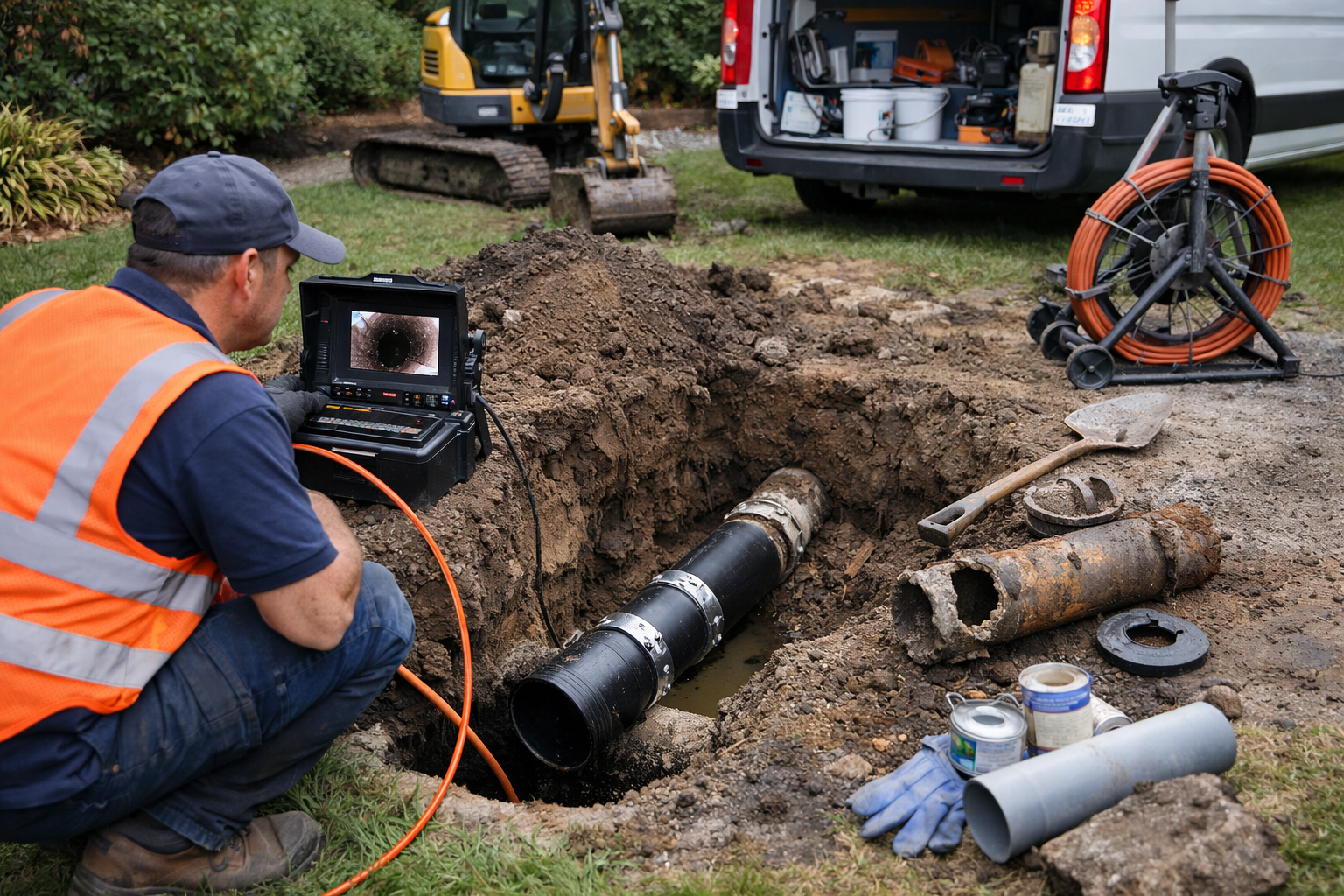
Correct diagnosis, like professional plumbers, is the initial aspect in repairing sewer line spots. Advanced technology of camera inspection is utilised to search the inside of the sewer pipe by professional plumbers. A small and waterproof camera is attached to the line, and real-time footage is relayed to detect problems with cracks, blockages, offsets or tree root penetration.
This check helps technicians to point out the exact place and extent of the damage. Proper identification would make sure that the repair would be precise and not excessive excavation.
2. Identifying the Suitability of Spot Repair
All sewer problems cannot be repaired on a spot basis. Plumbers also evaluate the general status of the pipe to know whether a specific repair will be successful. Spot repair is normally suggested in cases where:
- The destruction or damage is localised in a place.
- The remainder of this pipe is structurally sound.
- No general collapses, no serious deterioration.
In case the sewer line has become seriously damaged, it is possible that a complete solution can be recommended, which is replacement or relining.
3. Digging of the Affected Area
Controlled excavation starts once the damaged part has been verified. In comparison to the conventional sewer repair, which involves excavation over long distances of the pipe, spot repair only involves minimal excavation so as to reach the affected region.
Such a method causes minimal interference to the landscaping, driveways, flooring, or other buildings in the vicinity. There are situations where even the spot repair may be done using trenchless techniques, which further minimises the disturbance of the surface.
4. Cutting the Broken Bit of the Pipe.
When the sewer line has been accessed, the damaged section of the pipe is very carefully removed. This is very important to make sure that cracks, leakages, or material that has been weakened are no longer an issue for that system. The edges that surround the pipes are wiped and made ready so that they can have a proper seal with the replacement part. Elimination accuracy aids in limiting further stress or harm to the remaining pipeline.
5. Installation of the Replacement Section
The section that has been removed is replaced with a new section of the pipe, usually consisting of any durable and corrosion-resistant material. The changeover is firmly attached and covered to create a watertight fit in the position of the existing sewer line.
The spot repairs are made of modern materials that prevent areas under pressure, prevent intrusion of roots, and offer reliability over the long term. This is checked to make sure that the wastewater flows properly.
6. Fixing and Strengthening the Repair
After the replacement part has been fitted, the joints are covered with professional-level fittings or bonding agents. In other instances, other reinforcement measures might be implemented in order to support the repaired part and increase its service life.
This measure is aimed at the fact that the repair would be integrated into the existing system of pipes, and future leakages or weak spots would be excluded.
7. Testing the Sewer Line
Plumbers carry out extensive tests before job completion to ensure that the repair is successful. The water flow tests are conducted and, in certain instances, the follow-up camera inspection is conducted to confirm no leaks, blockages or alignment problems. Testing ensures that the sewer line is operational and in good condition in terms of performance and safety.
8. The Rebuilding of the Excavated Area
Once the test has been successfully conducted, the area excavated is then restored. The soil is also compacted, surfaces are brought back, and landscaping is restored as much as it can be brought to its original state. Excavation is minimal and therefore makes restoration faster and less expensive than the conventional approaches of repairing sewers.
9. What is the Time for Professional Assistance?
The sewer line problems are not the ones that should be disregarded, as per the expert team. Often, blocked sewers, unpleasant odour, lack of drainage, or overflowing sewage are some of the symptoms that indicate it is high time to call a professional. With early interventions of spot repair, the damage can be prevented at the initial stages, leading to costly changes.
Conclusion
Sewer line spot repair refers to the recent and effective technology that is aimed at repairing certain problems of sewer pipes without the requirement of complete replacement. This is done by applying sophisticated inspection equipment, minimal digging, and construction materials that will ensure that the sewer returns to its correct operation, saving on time, money and property damage. When timely done by competent people, spot repair is a sure and durable method of ensuring that sewer systems operate smoothly.